
By Emerald Law LLC · Last updated
Our digital devices are an important part of our lives in this day and age. Smartphones and computers let people connect with each other in ways that have never been possible before, but they also create new ways for people to fight with each other in their homes and families. Digital harassment, especially the use of spyware and illegal monitoring, is becoming a more common worry. When someone crosses personal boundaries online, a lot of people start to wonder if that kind of intrusion is serious enough to get legal help, like a Personal Protection Order (PPO), to keep them safe and at ease.
What is Digital Harassment
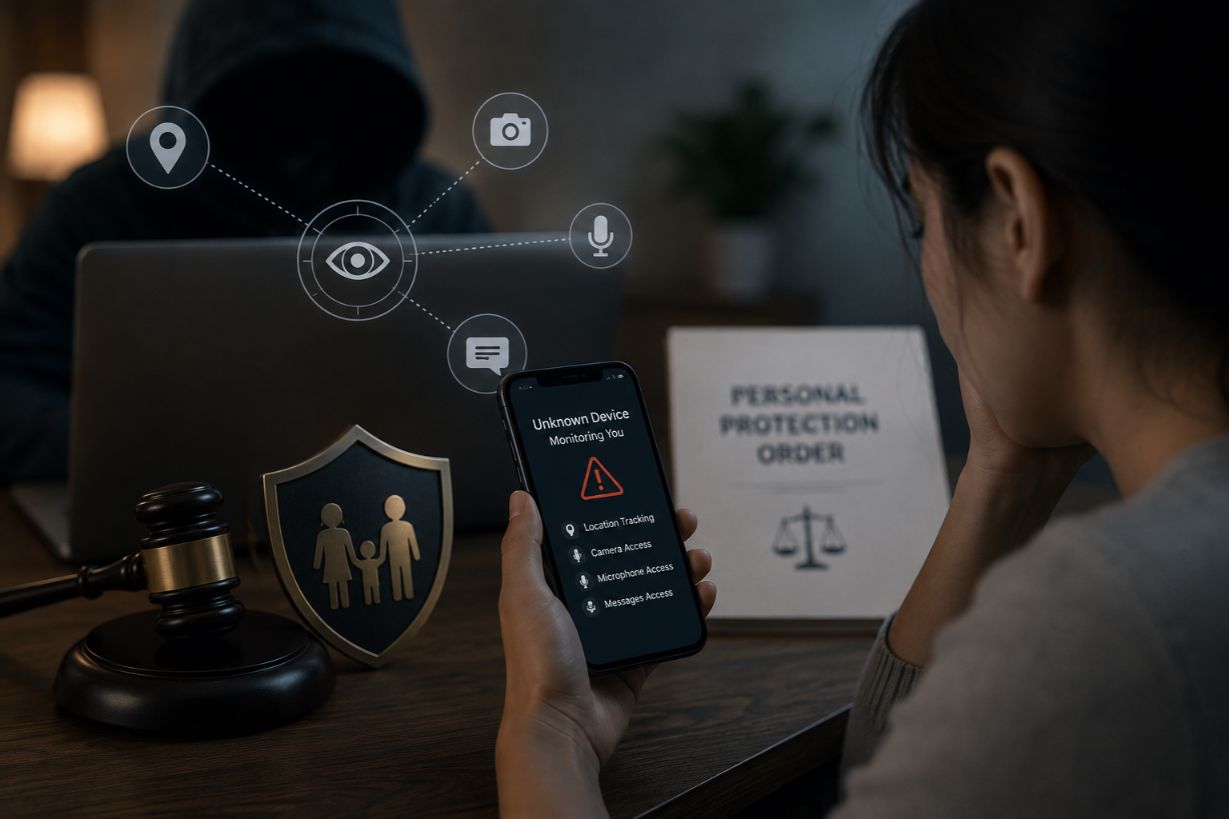
When technology is used to follow, scare, or force someone else to do something, that’s digital harassment. This doesn’t just mean getting too many unwanted messages. It often leads to more harmful actions, like putting “stalkerware” or spyware on a partner’s or family member’s phone. These apps can find out where you are using GPS, read your private messages, and even turn on your microphone or camera without you knowing.
Recognizing Different Forms of Digital Intrusion
The following table provides a neutral overview of common digital behaviors and how they are typically categorized in a modern safety context:
Method of Monitoring | Description of Activity | Potential Impact on the Individual |
Location Tracking | Using GPS apps or “Find My Device” features without consent to follow movement. | Feeling physically unsafe or unable to move freely in public spaces. |
Account Compromise | Accessing emails, social media, or banking without permission via stolen passwords. | Loss of privacy and potential for financial or social manipulation. |
Spyware/Stalkerware | Installing hidden software to record calls, messages, or environmental audio. | Severe psychological distress and a total loss of personal autonomy. |
Digital Impersonation | Creating fake profiles or using existing ones to send messages or post content. | Damage to reputation and social isolation from support networks. |
When someone is watched this closely, the effects are rarely just digital. It frequently results in an enduring state of fear and a diminishment of autonomy. The victim may feel like there is no “safe” place to be because the perpetrator knows where they are at all times. In a legal context, numerous jurisdictions are commencing to acknowledge that this type of psychological coercion can be equally detrimental as physical threats.
Lawyer’s Perspective: Legally, the problem is often proving that digital surveillance is a pattern of harassment rather than just a technical disagreement. Subject matter experts usually look for proof that these digital actions are meant to hurt the victim or control their daily life.
When Monitoring Turns Into a Legal Issue
Whether or not digital monitoring can lead to a court order usually depends on how local laws define “harassment” or “family violence.” In the past, these words only meant physical actions. But as society changes, laws have changed to include damage to people’s emotions and minds.
If someone can show that the unauthorized monitoring is being used to make them feel bad, control their movements, or make them feel threatened, it may be seen as a type of electronic stalking. In court, they usually look for a pattern of behavior instead of just one event. For example, if a family member uses a tracking app to show up uninvited at every place a person goes, this behavior is more consistent and gives a better reason for a protective application.
The Importance of Evidence in the Digital World
Digital harassment is hard to prove for a number of reasons. Spyware is made to be invisible, unlike a physical injury. But having accurate records is very important. This could include:
- Records of failed login attempts on email or social media accounts that don’t make sense.
- Screenshots of messages that suggest the sender knows something they shouldn’t.
- Technical reports from professional IT services that find software on a device that shouldn’t be there.
For lawyers or court officials, keeping a neutral, chronological record of these events can help make things clearer. It changes the conversation from “feeling” watched to showing a pattern of intrusive behavior that has been documented.
Effects on the mind and society
There are more than just legal issues to think about when it comes to being watched online. This often leads to “hyper-vigilance,” where a person feels like they have to constantly check their settings, change their passwords, or even give up their digital life altogether to feel safe. Being isolated online can make it harder to work, make friends, and keep other healthy relationships.
In these situations, education is very important. Knowing that digital privacy is a right and that breaking it is a big deal gives people the strength to ask for help sooner. A lot of community centers and specialized help services now offer “tech safety” checkups to help people keep their devices safe. If you know what to look for, you can often stop spyware from getting worse before it gets worse. The community can better help people who are dealing with the problems of modern home life if they treat digital safety as seriously as physical safety.
Frequently Asked Questions
Does digital monitoring count as family violence?
Modern legal frameworks increasingly recognize that unauthorized digital surveillance can constitute psychological abuse or harassment. When these actions are used to control or intimidate a family member, they may meet the criteria for a personal protection order.
Can I seek a court order if someone is tracking my phone?
Yes, if you can demonstrate a persistent pattern of unauthorized tracking that causes fear or distress, it may be grounds for legal intervention. Courts typically look for evidence that the monitoring is being used to interfere with your personal autonomy or safety.
What kind of evidence do I need to prove digital harassment?
Useful evidence includes screenshots of suspicious messages, logs of unexplained account login attempts, and professional technical reports identifying hidden software. Maintaining a neutral, chronological record of these incidents helps demonstrate a consistent pattern of intrusive behavior to officials.
How does spyware affect a person’s legal case?
Because spyware is designed to be invisible, proving its presence often requires assistance from subject matter specialists to document the intrusion. Once proven, it serves as strong evidence of a deliberate attempt to violate privacy and exert control over an individual.
Is digital privacy considered a legal right in domestic situations?
Yes, individuals generally have a right to digital privacy, and violating this through “stalkerware” or account compromise is a serious matter. Recognizing this right early allows individuals to seek “tech safety” checkups and legal support before the situation escalates.